In Coral Springs, your air conditioning system runs nearly year-round. What most homeowners don't realize is that their HVAC system can become a mold factory, distributing spores into every room of the house every time the AC kicks on.
Why HVAC Systems Grow Mold in South Florida
Your AC system naturally creates condensation as it cools warm, humid air. In Florida's climate, where humidity regularly exceeds 70%, your system produces significant amounts of water. When this condensation doesn't drain properly, it pools inside the air handler, ductwork, and drain pan — creating the perfect breeding ground for mold.
The problem compounds because the same system that grows the mold also distributes it. Every time your AC runs, mold spores travel through the ductwork and enter every room in your home.
Warning Signs of HVAC Mold
Watch for these indicators that your air conditioning system may have mold contamination:
- Musty odors when the AC runs — the most common first sign
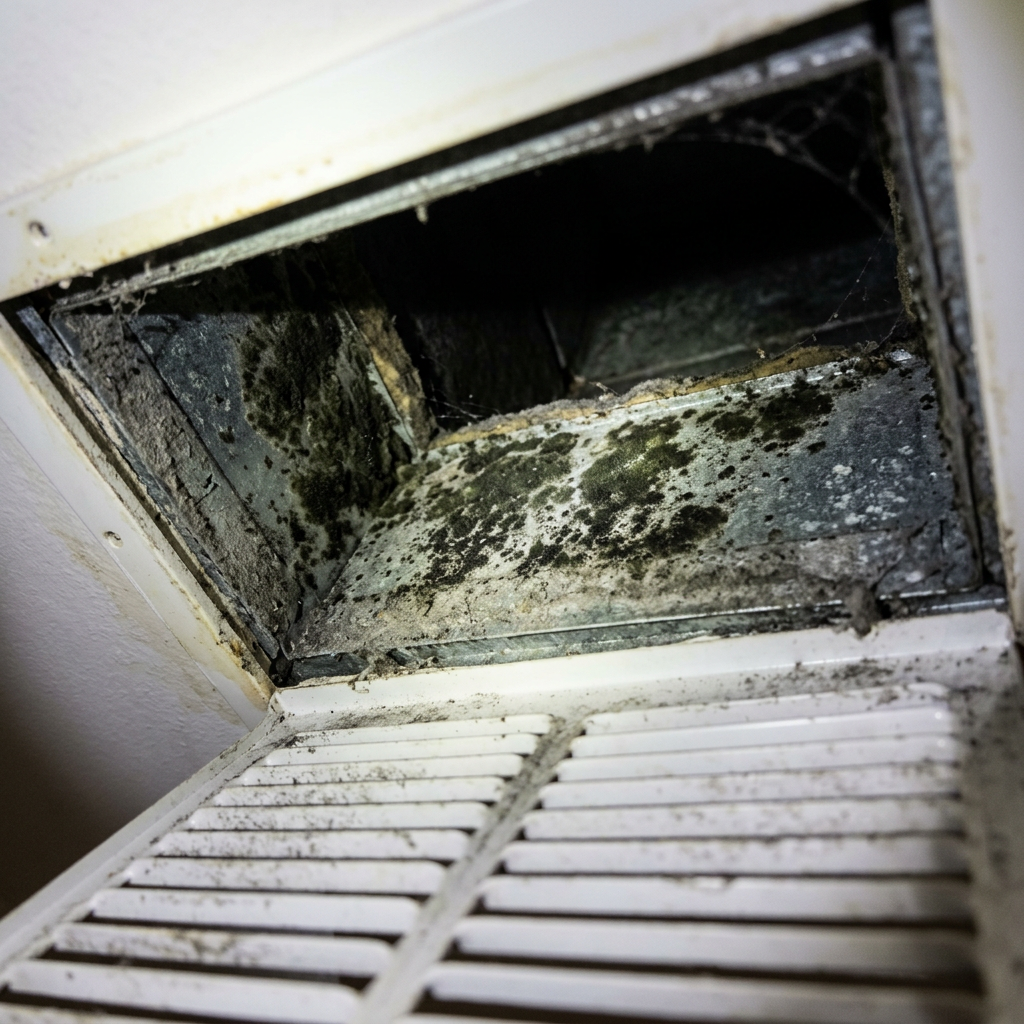
- Visible mold near supply vents — dark spots on vent covers or surrounding ceiling areas
- Increased allergy or asthma symptoms — especially when indoors with the AC running
- Dust buildup around return vents — excessive dust can indicate mold spores in the system
- Uneven cooling or higher energy bills — mold in ductwork restricts airflow
- Water stains near the indoor unit — indicates condensation issues
Prevention Strategies for Coral Springs Homes
1. Replace Air Filters Monthly
In Florida's climate, standard recommendations for quarterly filter changes aren't enough. During summer months (May through October), replace your air filter every 30 days. Use MERV 8 or higher filters to trap mold spores before they enter the ductwork.
2. Keep the AC Running
Many Coral Springs residents try to save money by turning off the AC while at work. In Florida's humidity, this is a mistake. When indoor temperatures rise, humidity spikes, and condensation forms on walls, ceilings, and inside ductwork. Set your thermostat to no higher than 82°F when away — the energy savings from turning it off aren't worth the mold risk.
3. Inspect and Clean the Condensate Drain Line
The condensate drain line carries moisture away from your air handler. In South Florida, algae and mold routinely clog these lines, causing water to back up into the system. Pour a cup of white vinegar down the drain line every 3 months to prevent buildup.
4. Install a UV Light in the Air Handler
UV-C lights installed inside the air handler kill mold spores, bacteria, and viruses as air passes through. This is one of the most effective preventive measures for Florida homes, costing $200-$600 installed.
5. Schedule Professional Duct Cleaning
If your home is more than 5 years old and the ductwork has never been professionally cleaned, schedule a cleaning. Our HVAC mold cleaning service uses HEPA-filtered equipment and antimicrobial treatments to remove existing contamination and prevent recurrence.
When DIY Isn't Enough
If you can see visible mold inside your ductwork, on vent covers, or around your air handler, you need professional remediation. Cleaning visible mold without addressing the full system just pushes spores deeper into the ductwork. Our IICRC-certified technicians use containment barriers and negative air pressure to clean the entire system without contaminating your living spaces.
Call (844) 393-2902 to schedule an HVAC mold inspection. We serve Coral Springs, Parkland, Coconut Creek, and all of Broward County.
Need Mold Remediation in Coral Springs?
Free inspections. IICRC-certified. 24/7 emergency service throughout Broward County.