Stachybotrys chartarum — commonly called "toxic black mold" — is one of the most feared mold species found in South Florida homes. While the term "toxic mold" is sometimes overused, Stachybotrys genuinely produces mycotoxins that can cause serious health problems. Here's what Coral Springs homeowners need to know.
What Makes Black Mold Different
Unlike many common household molds, Stachybotrys chartarum produces mycotoxins — chemical compounds that can cause health problems even in small amounts. These toxins are present in the mold spores and can be inhaled, ingested, or absorbed through skin contact.
Black mold requires constant moisture to grow. It doesn't appear from normal humidity alone — it indicates an ongoing water problem such as:
- A chronic plumbing leak behind a wall
- Roof leak that allows repeated water intrusion
- Condensation from poorly insulated pipes
- Flooding that wasn't properly dried
- Sewage backup
Health Effects of Black Mold Exposure
Exposure to Stachybotrys mycotoxins can cause a range of health problems:
Respiratory symptoms:
- Chronic coughing and sneezing
- Shortness of breath or wheezing
- Asthma attacks in people with asthma
- Chronic sinus infections
Neurological symptoms:
- Headaches
- Memory problems and difficulty concentrating
- Mood changes, including irritability and depression
- Fatigue and chronic exhaustion
Other symptoms:
- Skin rashes and irritation
- Eye irritation and redness
- Suppressed immune system function
- Unexplained nosebleeds
Who's most at risk: Infants and children, elderly adults, pregnant women, and individuals with compromised immune systems are most vulnerable to serious health effects from black mold exposure.
How to Identify Black Mold
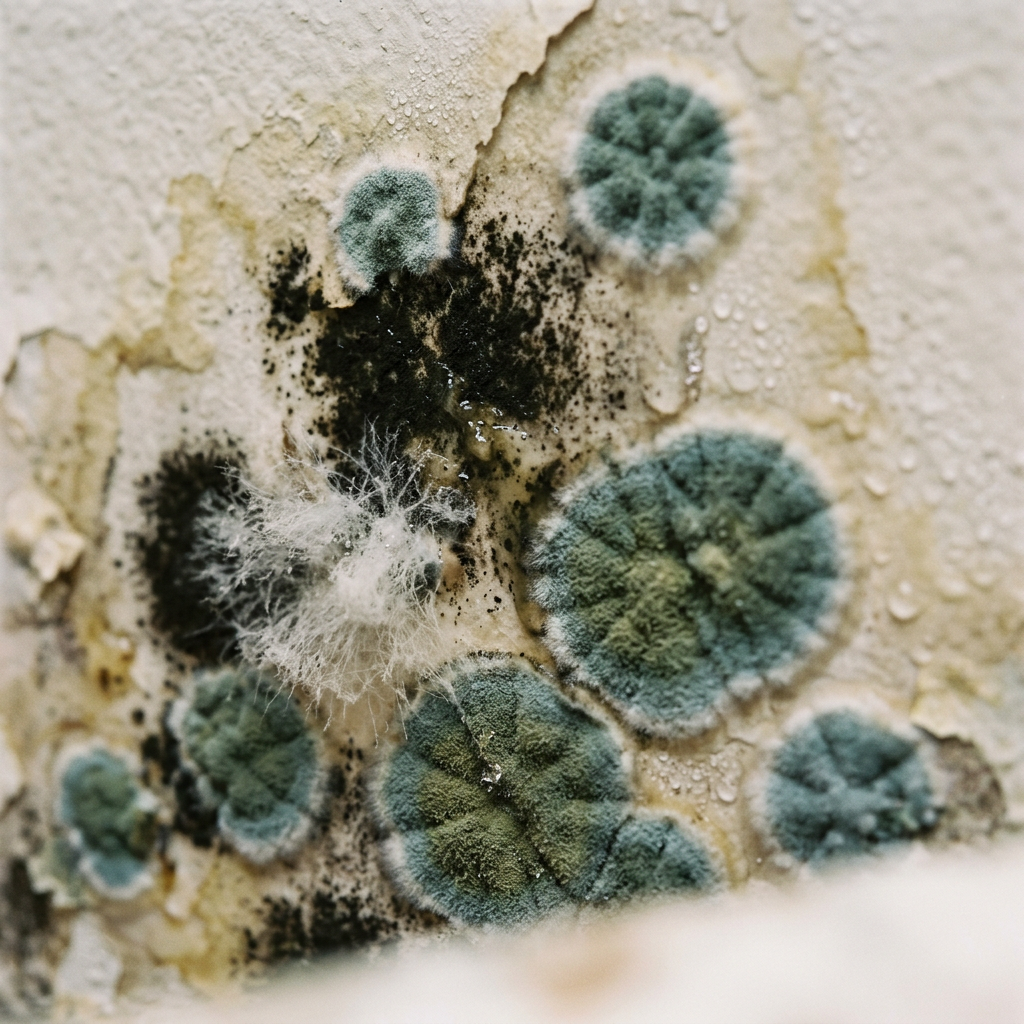
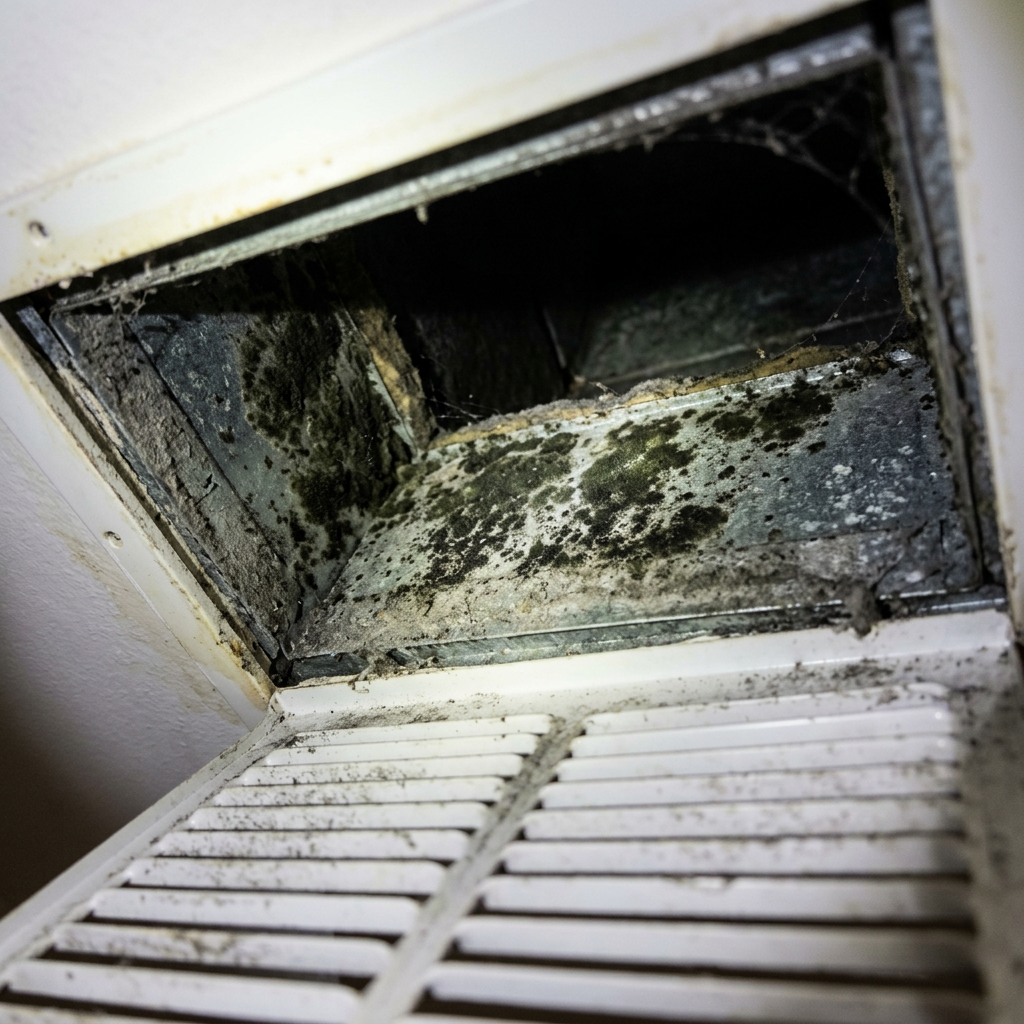
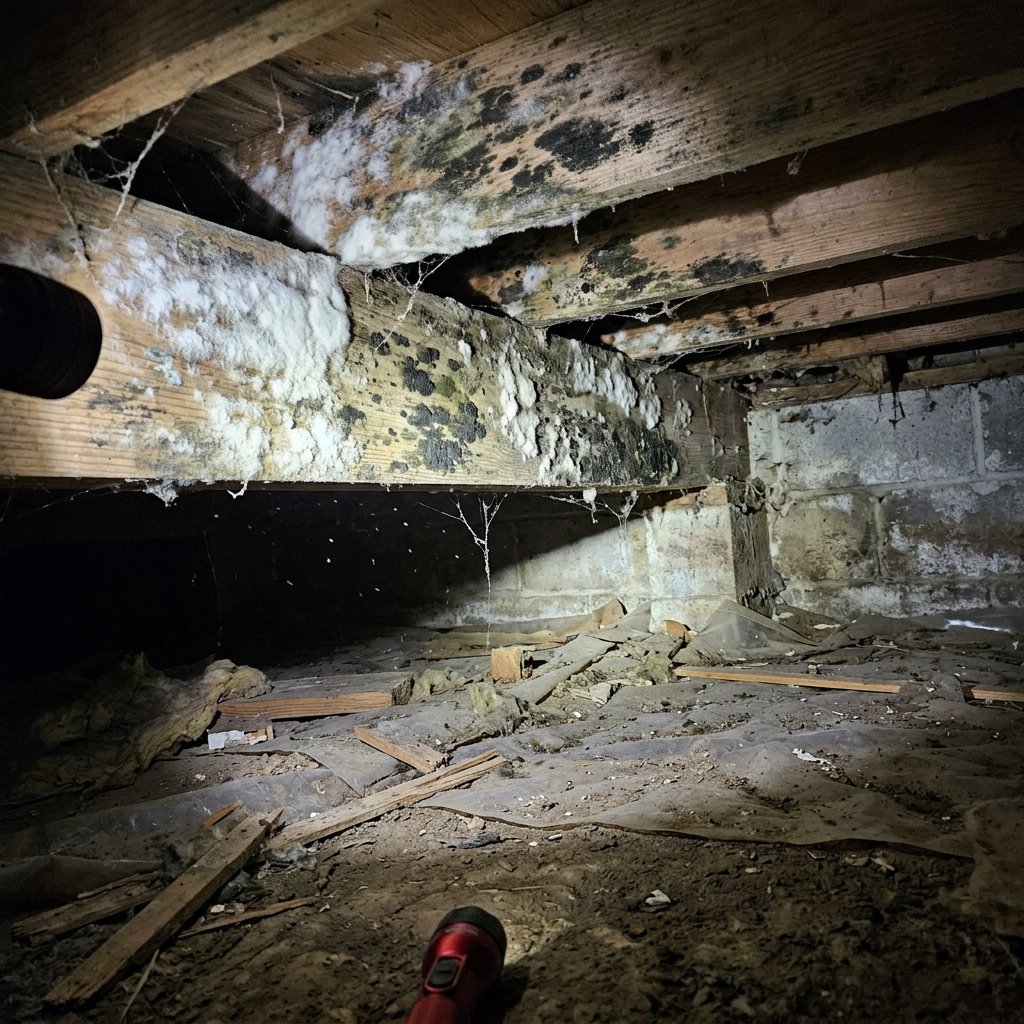
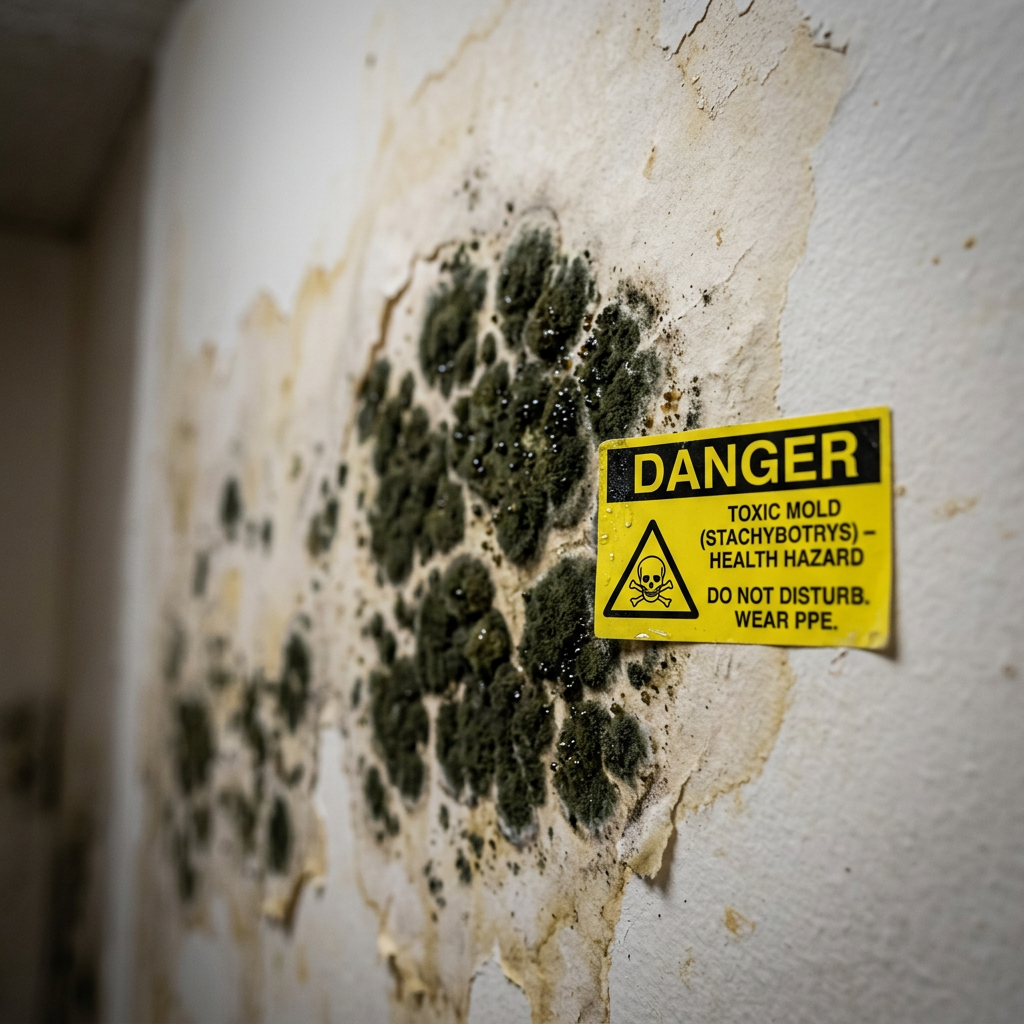
Stachybotrys is dark greenish-black and has a slimy, wet appearance when actively growing. As it dries, it becomes powdery. It typically grows on materials with high cellulose content — drywall, paper, ceiling tiles, and wood — that have been wet for extended periods.
Important: You cannot definitively identify black mold by sight alone. Many molds are dark-colored, and only lab analysis can confirm Stachybotrys chartarum. If you suspect black mold, don't disturb it — contact a professional for testing.
What to Do If You Find Black Mold
- Don't disturb it. Cleaning, scrubbing, or even brushing against black mold releases thousands of toxic spores into the air.
- Evacuate the affected area. Especially important if family members are experiencing symptoms.
- Call a professional immediately. Black mold remediation requires specialized containment protocols that go beyond standard mold cleanup.
- Address the moisture source. Black mold will return if the water source isn't fixed.
- Document the damage. Take photos and contact your insurance company if the cause is a covered peril.
Professional Remediation Protocol
At Gators Mold Medic, we follow IICRC S520 standards for black mold remediation:
- Containment — full enclosure with 6-mil polyethylene sheeting and negative air pressure
- PPE — all technicians wear full-face respirators with P100 filters and disposable suits
- Source removal — contaminated materials are removed and sealed in bags before disposal
- HEPA filtration — air scrubbers run throughout the process to capture spores
- Antimicrobial treatment — EPA-approved fungicides applied to remaining surfaces
- Clearance testing — independent verification that the area is safe for re-occupation
Black mold is not a DIY project. If you suspect it in your Coral Springs home, call (844) 393-2902 immediately for a free inspection.
Need Mold Remediation in Coral Springs?
Free inspections. IICRC-certified. 24/7 emergency service throughout Broward County.